Why Your Smart Fab Needs Infrared to Handle the Heat
If you’re building out an Industry 4.0 fab, you have to rethink how you deal with heat. The old-school resistive heating we’ve all used for years? It’s just too slow. It has this annoying thermal lag that kills the momentum of a digitized production line. That’s why we’ve moved to high-efficiency infrared (IR) systems. They give us the kind of precise, data-driven control that actually keeps up with the speed of automated semiconductor lines.
Speed that actually feels instant
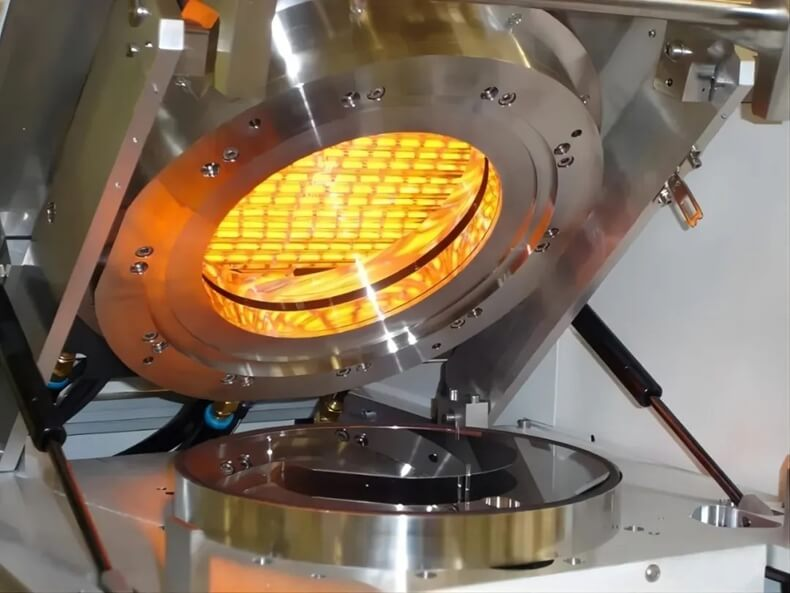
In a digital setup, your heating system needs to move as fast as your PLC commands. Here’s the thing: IR systems send radiant energy straight to the substrate. You aren’t wasting time heating up the air or the chamber walls first. It’s nearly instant. You ramp up, you cool down, and you move on. It’s fast. Really fast. And that changes everything for your workflow, cutting down the cycle time per wafer and stopping the energy bleed when things are idling.
Making heat a variable, not a guess
A smart Fab lives and breathes on closed-loop feedback. We hook up IR emitters to high-precision pyrometers and PID controllers, which gives us a constant stream of real-time data. You can see exactly how heat is spreading across the wafer in milliseconds. It’s a huge relief. Instead of crossing your fingers and hoping the temperature is right, you can spot a thermal drift before it ruins a whole batch of wafers. It turns heating from some static utility you just “turn on” into a process you can actually control.
The trade-offs you need to watch for
Now, it’s not all magic. There are a few things that can bite you if you aren’t careful. High-density IR arrays pull a lot of power. You’ll save energy during the process, sure, but your electrical panels need to be beefy enough to handle those big, instantaneous current draws. And then there’s the reflection. If your chamber shielding isn’t tight, that heat leaks right into your electronics rack. That’s a recipe for fried components and premature failure. The only way to stop that is proper thermal zoning. Get that right, and the whole system just hums.