
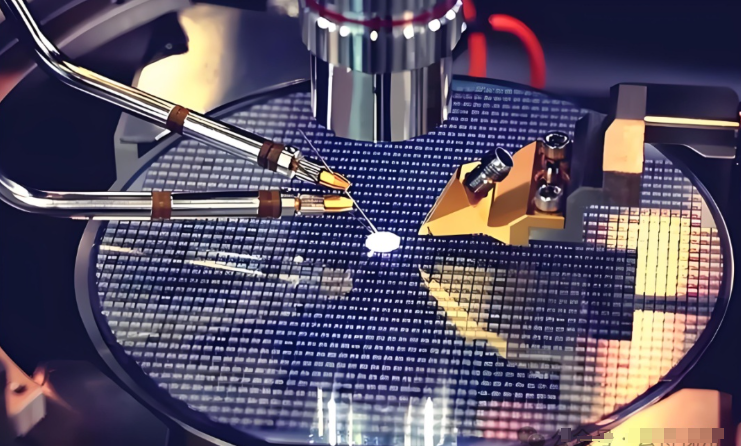
Stop Heating Your Equipment and Start Heating Your Wafers
Ever noticed how some semiconductor tools feel like space heaters? Most standard resistive heaters are just inefficient. They blast heat everywhere, warming up the entire chamber. The problem is, you aren’t trying to heat the room—you’re trying to heat a wafer. When the inner walls of a million-dollar piece of equipment get hot enough to burn an operator or melt a seal, you’ve got a real problem on your hands. We figured there’s a better way. Instead of heating everything, we use directional infrared (IR) technology. How it actually works Think of it like a spotlight rather than a lightbulb. While convection heaters just push hot air around, IR lamps send electromagnetic radiation in a straight line. We aim these lamps right at the wafer surface. The substrate soaks up the energy, but the surrounding air and the machine casing stay out of the equation. The result? Your wafer hits the exact temperature it needs, but the outside of the machine stays cool enough to touch. It’s a massive relief for anyone actually working on the floor. The tricky part (and how we handle it) Now, this isn’t magic; there are some trade-offs. To get the thermal density required for wafers, we use short-wave quartz lamps. They hit hard and they hit fast. But because the energy is so concentrated, your alignment has to be spot on. If you’re off by even a few millimeters, you’ll end up with uneven heating across the wafer. It’s a tight margin, but it’s worth it. We also use high-precision controllers to make sure the temperature doesn’t overshoot. And a quick word of caution: those quartz tubes are fragile. If your mounting brackets put too much pressure on the glass, they’ll snap during thermal cycling. You have to treat them with a bit of care. Making life easier on the shop floor When you stop wasting heat, everything gets easier. Your HVAC doesn’t have to work overtime, and your cooling water systems can finally catch a break. Plus, your operators aren’t standing next to a radiating wall of heat all day. For engineers trying to tighten their thermal budget and stop the cleanroom from turning into a sauna, this is a pretty simple swap that makes a huge difference.