



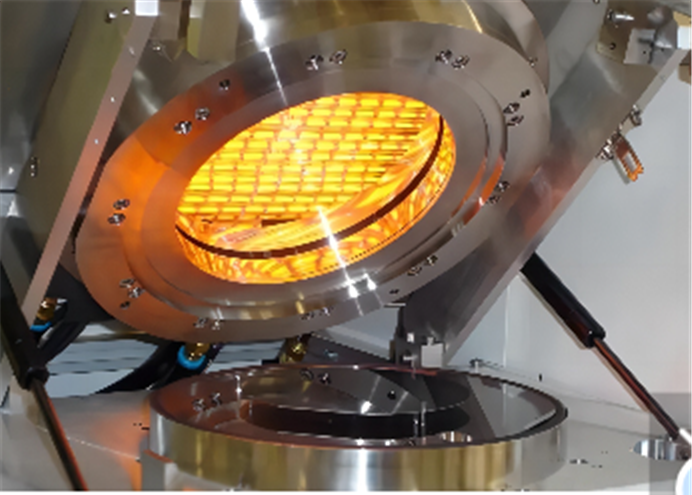
On the fab floor, temperature isn’t just a setting—it’s a boundary. A half-degree excursion during photoresist soft bake can push critical dimension (CD) targets off and scrap a whole lot. That’s why we built our infrared (IR) heating modules around the kind of thermal control lithography and photoresist processing actually demand: repeatable heat, with no room for compromise. What matters, technically We run short-wave IR emitters with fast response and tight spectral control, heating the wafer directly. The payoff is less thermal lag and less influence from the chamber. Wafer-level uniformity stays within ±0.1°C across the process window, so soft bake keeps photoresist flow and solvent removal stable, and hard bake delivers consistent crosslinking. Cleanroom Class 1–100 compatibility is baked into the design: low-outgassing materials, sealed optics, and zero particle generation. The system holds thermal stability under continuous duty, so it can run 24/7 with maintenance intervals you can plan around. Why it works in production Drop it in line and it fits into wafer drying, photoresist pre-bake, and post-exposure bake without slowing throughput. Tight temperature repeatability cuts CD scatter and lifts yield across lots. Fast setpoint changes trim cycle time and reduce energy per wafer, while the clean thermal profile keeps surface defects low—fewer reworks. The outcome is fewer excursions, photoresist profiles that stay consistent, and a process that behaves the same shift after shift. Here’s what you need to keep in mind IR heating is line-of-sight, so wafer geometry and carrier design will influence local temperature distribution. We deliver a validated thermal stack—emitter placement, reflector geometry, and sensor feedback—so you hit targets on bare Si, patterned wafers, and advanced stacks. Expect a commissioning run to tune recipes for your specific photoresist and substrate stack. And because output power and footprint have to match the track or coater/baker interface, confirm mechanical and electrical constraints before installation.