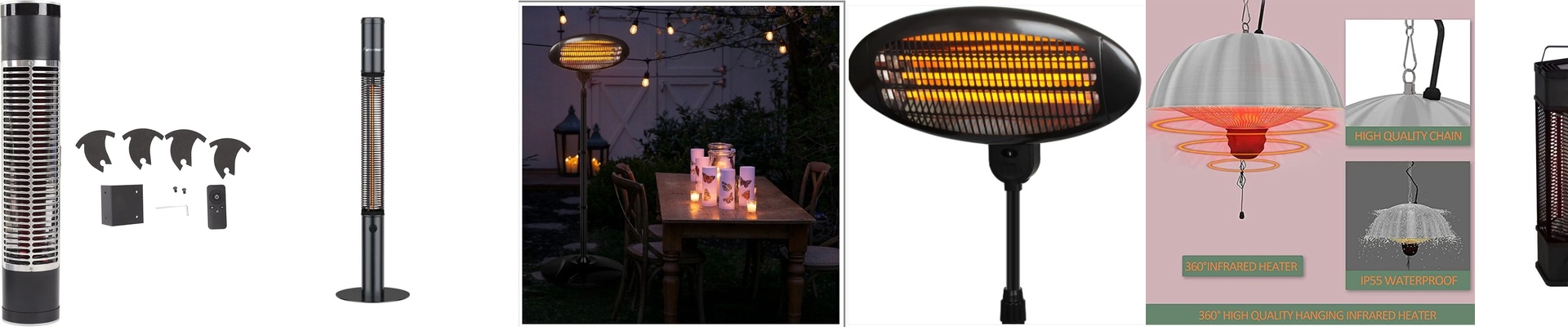
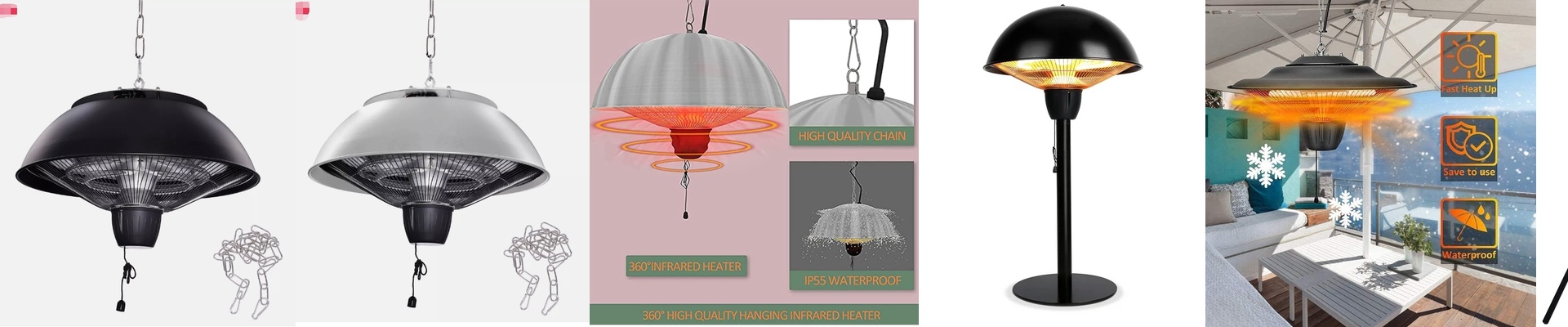
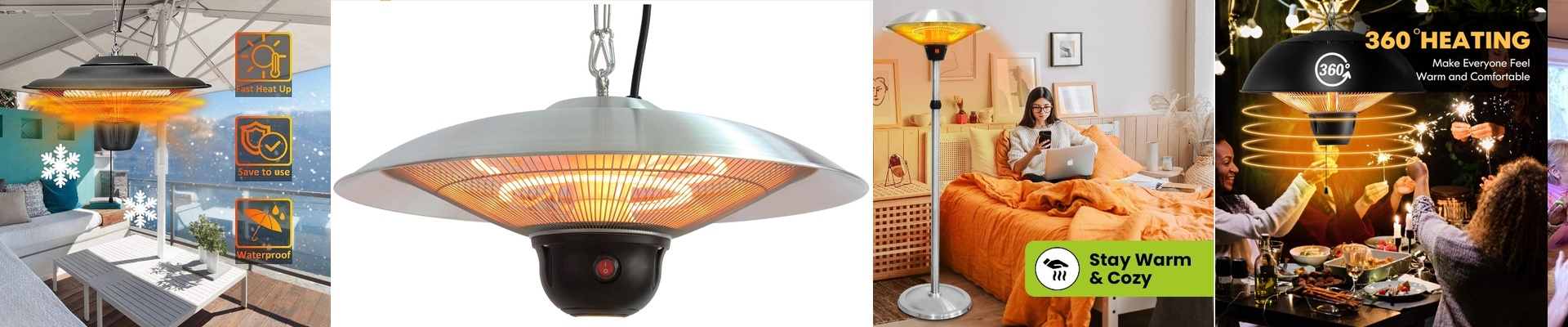
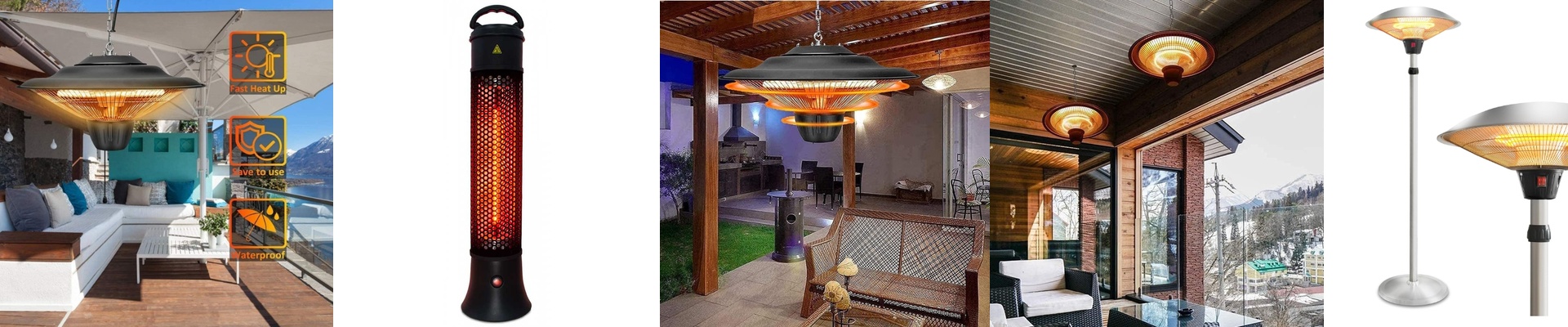
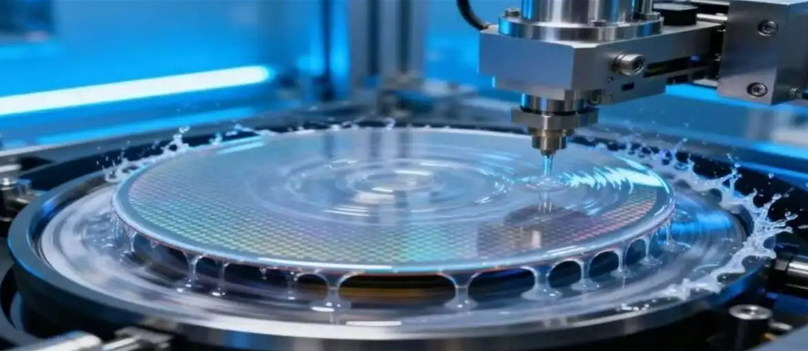
Watch the 300 mm wafer roll into the lithography cell. Spin on the photoresist, and the clock starts ticking. You need a soft bake that pulls out solvent without making the resist flow. You need a hard bake that crosslinks the resist without inducing slip or stress. And you need both—consistently—so the process survives lot after lot of qualification. If the bake isn’t uniform, you’ll see linewidth variation across the field. Ramp too slow, and you burn thermal budget and drift your critical dimensions. Let the heater drift, and your calibration ages until your control charts stop telling the truth. In quantum dot (QD) fabrication, the stacks are thin, the interfaces are sharp, and the thermal window is tight. One bad bake can wipe out margin the device team fought hard to design in. That’s why we built our QD fabrication heaters around infrared (IR) heating. Semiconductor thermal work isn’t just about hitting a temperature—it’s about delivering temperature to the film, uniformly, with a rise and settle you can count on.
What matters under the hood
IR heating in wafer processing isn’t a heat gun pointed at a surface. It’s a controlled flux profile matched to the substrate and the film stack. We use short-wave IR sources with a fast response, so you get rapid, repeatable ramps without overshoot. The emitters are arranged to give uniform power across the wafer plane, and the system measures temperature at multiple points to close the loop. The payoff is wafer-level uniformity of ±0.1°C across the full process window. That number isn’t a slogan. It means when your photoresist soft bake runs 90–110°C, the center and edge see the same setpoint within tolerance. It means when your hard bake runs 100–130°C, you’re not chasing hot spots by trimming recipes. Uniformity translates straight into linewidth control and defect performance. The heater is built for cleanroom reality. It runs in Class 1–100 environments without triggering particle excursions, because the hot zone is isolated from the mechanical envelope, and the exhaust path prevents outgassing carryover. The hot-zone materials are chosen to minimize particle shedding during thermal cycling. Reliability comes down to uptime and stability. Our units run 24/7 in production with zero unplanned downtime, and emitter life is rated beyond 5,000 hours with less than 5% output drift. That matters because every tool change is a qualification, and every qualification costs time and capacity. The control system keeps repeatability tight. Temperature repeatability holds within ±0.5°C bake to bake, and ramp control stays within 1% across cycles. For wafer drying and post-clean bake steps, the same platform gives you controlled desorption without thermal shock. The profile is reproducible—and reproducibility is what makes control charts worth looking at.
Why this works for QD lines
Quantum dot fabrication is all about thin films, patterning, and interface control. The thermal steps aren’t auxiliary—they set the stage for everything that follows. In photoresist processing, the soft bake is your first real control point. Too little energy, and solvent remains, giving you footing and scum. Too much, and the resist flows, killing resolution. Our IR heater dries the resist quickly and evenly, with a controlled plateau that removes solvent without pushing the resist past its flow point. Then comes the hard bake, where the goal is crosslinking without stress. Nonuniform heating creates thermal gradients, and those gradients become stress gradients across the wafer. You end up with pattern slip, edge bead issues, and yield loss on the edge die. With ±0.1°C uniformity, the crosslink profile stays consistent across the wafer, and edge yield settles down. Wafer drying and post-clean bakes are just as touchy. A wet wafer entering the coat track can carry micro-droplets that leave marks after spin. A post-clean bake that’s too aggressive can pull moisture out too fast and drag particles back onto the surface. The IR platform gives you a rapid, controlled bake that brings the wafer to a stable state without thermal shock, keeping particle count low and surface energy consistent. The gains are measurable. Tighter uniformity narrows linewidth distribution, which cuts trim budgets and mask iterations. Repeatable ramps reduce thermal load on underlying layers, preserving doping profiles and interface quality. Stable cycles cut scrap and rework—fewer rework cycles means higher throughput without adding capital. Energy use drops, too. IR heats the wafer and film stack directly, with minimal chamber heating. Setpoint is reached fast, and hold is steady without wide cycling. That lowers kWh per lot, and in high-volume fabs, that savings adds up fast.
The practical details you’ll run into
An IR heater isn’t a drop-in swap for every thermal module. It needs line-of-sight to the wafer, and the mechanical envelope has to keep the hot zone from coupling heat into adjacent components. If space is tight, the integration plan has to cover emitter placement, shielding, and exhaust routing. Thermal mass matters. If you’re used to a high-thermal-mass hot plate, your process window may have been tuned around slow ramps. IR has lower thermal mass and faster response, which can expose timing mismatches in the recipe. Plan a re-qualification that captures ramp rate, soak time, and temperature settle—not just peak temperature. Film stacks can be absorptivity-sensitive. Different underlayers absorb IR differently, which can shift the effective temperature profile. We run absorptivity mapping across common stacks during installation, and the control system stores compensation profiles so the same setpoint delivers the same film temperature across product variants. Cleanroom compatibility is straightforward, but it isn’t automatic. The heater has to be plumbed to the right exhaust, and the exhaust must be balanced so you don’t get backflow when the door opens. Particle performance depends on airflow discipline. We provide cleanroom interface drawings and exhaust load calculations, and we verify particle counts during commissioning. If you’re running quantum dot fabrication at pilot or volume, thermal steps are where wins and losses happen quietly. The bake isn’t a background step—it’s a control lever. We deliver an IR heater that makes that lever precise, stable, and repeatable. You get a soft bake that removes solvent without flow, a hard bake that crosslinks without stress, and drying that leaves the wafer ready for the next coat. You get uniformity you can measure, repeatability you can qualify, and uptime you can bank on. When the wafer moves into the lithography cell, the bake shouldn’t be what you’re thinking about. It should just work.