


Why Gold-Coated Reflectors Actually Matter for Your Wafers
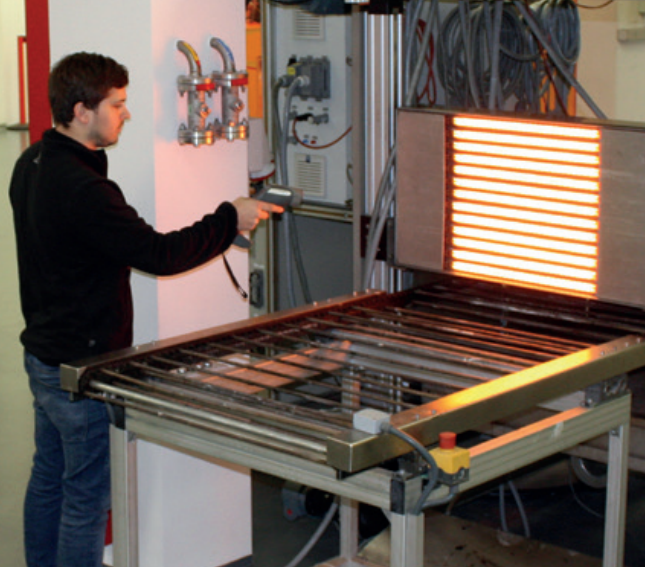
If you’re heating silicon wafers and your chassis is getting hot, you’re basically throwing money into the air. It’s a design flaw, plain and simple. Most people start with aluminum reflectors, but the problem is they soak up too much energy. That’s why we use gold. By coating the reflectors in gold, we make sure the infrared radiation from the bulb actually goes where it belongs: straight onto the wafer. The secret is in the physics. Gold just handles the infrared spectrum better than polished steel or aluminum. It doesn’t “grab” the photons; it bounces them. This gives you a much tighter heat footprint and a temperature that stays consistent across the whole wafer. No more guessing if the edges are as hot as the center. But here’s the catch. When you cram high wattage into a small space to get those fast ramp-up times, things get intense. If you pair a high-wattage IR lamp with a gold reflector, you’ve got to be smart about your cooling. Since the gold is so efficient at bouncing heat, any radiation that misses the wafer is going to hit your housing. If you don’t have proper venting, you’re looking at melted sockets or warped brackets. Not a fun way to spend a Tuesday. Is it worth the price tag? Look, gold isn’t cheap. If you’re doing low-precision work, this is probably overkill. You don’t need a Ferrari to go to the grocery store. But in semiconductor processing? Thermal uniformity is everything. In that world, the stability and energy savings make the cost a no-brainer. One pro tip: check your bulb alignment every single week. With a high-reflectivity system, even a tiny tilt can create a hot spot. That’s how you end up with uneven doping or etching, and then you’re scrapping expensive wafers. When you’re setting it up, stick with high-temperature leads. And make sure your PID controller is tuned for the faster response time. Gold reacts quickly—your controller needs to keep up.