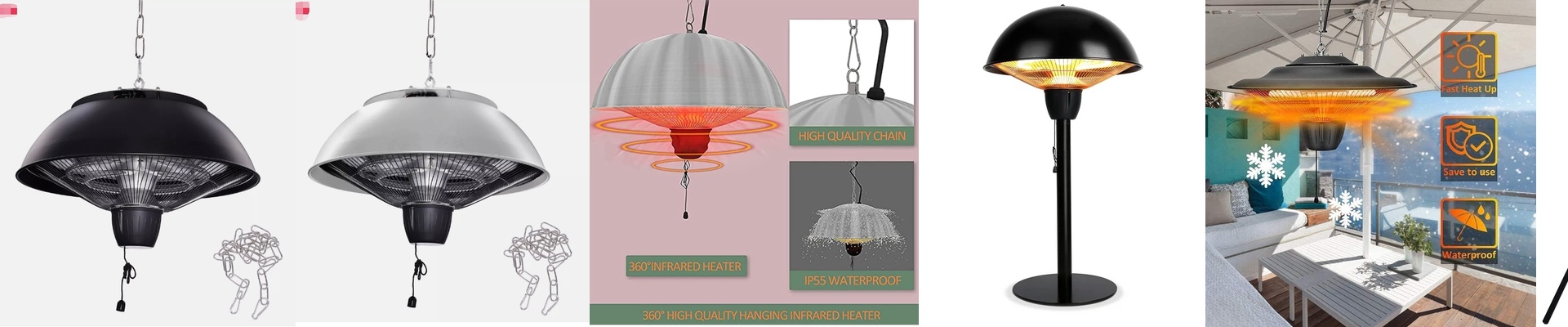

Why Your Patio Heater Keeps Dying (and How We Fixed It)
If you’ve ever had a waterproof patio heater quit on you, check the lead-wire junction. That’s almost always where the trouble starts. Think about it: you’ve got an infrared heater sitting outside in the damp air, swinging from freezing cold to scorching hot every time you flip the switch. That constant stretching and shrinking creates tiny gaps in the seal. Once moisture sneaks in, it starts eating away at the internals. Before you know it, you’ve got oxidation, a short circuit, and a dead heater. The reality of the “heat cycle” Those wires take a serious beating. When cheap silicone or rubber seals are hit with rapid temperature swings, they eventually crack. It’s a slow process, but once that seal is gone, oxygen and humidity hit the hot terminals. The insulation gets brittle. It starts flaking off. And when that happens? The current jumps. It’s a quick trip to the breaker box and a ruined unit. Doing it the right way Most off-the-shelf heaters just use basic heat-shrink or some cheap glue and call it a day. We do things differently. We use a multi-stage process with high-temp ceramic potting compounds and gaskets that actually move with the metal or quartz casing. Instead of just covering the wire, we lock it in a hermetic seal. It keeps the electricity exactly where it belongs, even if the heater is getting drenched in a rainstorm. One quick tip for installation Here’s the thing: because these seals are so tight, they’re a bit more rigid. If you bend the wires too sharply when you’re installing the unit, you might create a micro-crack. Just give the wiring a bit of a “service loop”—a little extra slack—and you’re golden. We built these because we were tired of seeing consumer-grade heaters die after one winter. It really just comes down to using the right chemistry and a precise crimp. Simple as that.